 Haefele, Walter
R. "General George Washington: Espionage Chief." American History
Illustrated 24, no. 6 (Nov.-Dec. 1989): 22-27, 69-70.
Haefele, Walter
R. "General George Washington: Espionage Chief." American History
Illustrated 24, no. 6 (Nov.-Dec. 1989): 22-27, 69-70.
[RevWar/GW]
Haestrup, Jorgen. European Resistance Movements, 1939-1945: A Complete History. Westport, CT: Greenwood, 1981.
From publisher: "Haestrup profiles the resistance movements as an integral part of the total history of the war. He analyzes their different approaches and levels of resistance in each occupied nation -- describing their organization, intelligence-gathering and sabotage achievements, labor strikes, civil disobedience, politics, supplies, external communication, assassinations, and partisan warfare."
[WWII/Eur/Resistance/Gen]
Haestrup, Jorgen. Secret Alliance: A Study of the Danish Resistance Movement, 1940-45. 3 vols. New York: New York University Press, 1975-1977.
[WWII/Eur/Resistance/Denmark]
Haffenmeister,
D., J. Romm, and K. Tsipis. "The Verification of Compliance with Arms-Control
Agreements." Scientific American, Mar. 1985, 28-35.
[Recon/ArmsControl]
Haffner, Sebastian [pseud., Raimund Pretzel]. Offensive Against Germany. London: Seeker & Warburg, 1941.
[WWII/Eur/Gen]
Haga, Arnfinn. Skyggen: SOE-agenten Louis Pettersen. Oslo: Cappelen Damm, 2009.
Pettersen ("Shadow") was a Norwegian who served in SOE.
[UK/WWII/Services/SOE; WWII/Eur/Res/Norway]
Hagaman, H.T.
1. "Marine Corps Intelligence in the '80s." Signal 36 (Sep. 1981): 69.
2. "Marine Corps Intelligence." Marine Corps Gazette 66 (Jan. 1982): 50-53.
[MI/Marines/To89]
Hagan, Frank E. "Espionage as Political Crime? A Typology of Spies." Journal of Security Administration 12, no. 1 (1989): 19-36.
Calder: "Provides typologies of ten spies."
[SpyCases/U.S./Gen]
Hagan,
Kenneth J. American Gunboat Diplomacy and the Old Navy, 1877- 1889. Westport, CT: Greenwood, 1973.
Petersen: "Coverage of intelligence aspects."
[MI/Navy]
Hagedorn, Dan, and Lief Hellstrom. Foreign Invaders: The Douglas Invader in Foreign Military and US Clandestine Service. Leicester, UK: Midland, 1994.
[Recon/Planes]
Hageman, Mark C. "Espionage in the Civil War." Signal Corps Association (1860 to 1865) at: http://www.civilwarsignals.org/pages/spy/spy.html.
Confederacy: Thomas Jordan, Rose O'Neal Greenhow, Thomas N. Conrad, J. Franklin Stringfellow, William Norris, Belle Boyd, James Harrison, John S. Mosby, Turner Ashby, Harry Gilmor, Jerome Clarke, Sam Davis.
Union: Allan Pinkerton, Timothy Webster, Elizabeth Van Lew, Lafayette C. Baker, Sarah Emma Edmonds, Pauline Cushman, William A. Lloyd, Thomas Boyd, Henry Young, George H. Sharpe, James J. Andrews.
[CivWar/Overviews]
Hagen,
Louis E. The Secret War for Europe: A Dossier of Espionage. New York: Stein & Day, 1969.
Clark comment: Hagen's coverage is of post-World War II espionage cases in West Germany, in effect substituting that arena for the whole of Europe. Pforzheimer calls this a "well-recommended book." Constantinides also speaks positively about the work, noting specifically that the author "has a knack for conveying the essence and feel of the[] humint collection cases" he covers. However, "the reader should be wary ... of some accounts of how certain agents were uncovered."
[Germany/West]
Hager, Nicky. Other People's Wars: New Zealand in Afghanistan, Iraq and the War on Terror. Nelson, New Zealand: Craig Potton Publishing, 2011.
Peake, Studies 57.2 (Jun. 2013), finds that "[d]espite the author's less than objective opinions," this book "depicts the not insignificant contribution of New Zealand's intelligence units in joint operations. More generally, it provides an in-depth view of New Zealand's role in Afghanistan and to a lesser extent Iraq, subjects not dealt with elsewhere. Still, read with caution."
[OtherCountries/NewZealand]
Hager,
Nicky. Secret Power: New Zealand's Role in the International Spy Network.
Nelson, New Zealand: Craig Potton Publishing, 1996.
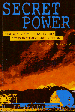
According to McGehee, CIABASE Update Report, Aug. 1997, New Zealand's Government Communications Security Bureau (GCSB) uses electronics to spy on countries throughout the Pacific, including friends and trading partners. Hager shows how New Zealand's spies, geared to serve an alliance with the United States, proved useless in preventing domestic terrorism and providing accurate intelligence. Kruh, Cryptologia 21.1, says that Secret Power is "an excellent book with much new information about signals intelligence, intelligence agency operations and [the] UKUSA" agreement.
Herman, I&NS 12.4, finds this work to be "one of [the] more informative and thought-provoking examples" of investigative journalism undertaken with the aim of condemning intelligence. The author presents "a detailed study" of New Zealand's Sigint organization and its collaboration within the UKUSA Sigint alliance. Along the way, Hager presents "an elaborate, almost excessive account of the minutiae of organization." It would, however, "be unwise to take his details [on the Allied exchanges and collaboration] as gospel." In additions, readers "should be on the watch for an undeclared conspiracy theory about US motives and influence."
[NSA/Overviews; Other Countries/NewZealand]
Hagerty, Alexander.
"An Unpublished Yardley Manuscript." Cryptologia 23, no.
4 (Oct. 1999): 289-297.
The author discusses an unpublished manuscript Yardley wrote about the attack on Pearl Harbor. Yardley's manuscript "contains more spin than substance" and "is merely a curiosity."
[Cryptography]
Hagerty, Edward
J. The OSI Story: A 50-Year Retrospective. Washington, DC: Air Force
Office of Special Investigations, 1997.
[MI/AirForce]
Haggman, Bertil. "Soviet Russian Active Measures in Scandinavia." Ukrainian Review 34, no. 3 (1986): 69-75. [Calder]
[Russia/D&D]
Hagman, Harlan
L. Nathan Hale and John André: Reluctant Heroes of the American
Revolution. Interlaken, NY: Empire State Books, 1992.
[RevWar/Hale & Arnold]
Hagood, Wesley O. "Overcoming Barriers to Effective Collaboration." Defense Intelligence Journal 16, no. 2 (2007): 121-138.
The author suggests that collaboration within the Intelligence Community (IC) involves "people, process, technology, and infrastructure dimensions." He argues that "[l]essons learned from crisis operations can be institutionalized to improve the IC's performance at all times."
[GenPostCW/00s/Gen]
 Return to H Table of Contents
Return to Alphabetical Table of
Contents